
When planning exterior improvements to your home, the material you select fundamentally determines both the aesthetic outcome and the longevity of your investment. Cedar has maintained its position as a preferred wood species for outdoor applications for generations, and this enduring popularity stems from measurable performance advantages rather than mere tradition. Understanding what makes cedar exceptional helps homeowners make informed decisions that balance initial costs with long-term value.
The choice of exterior materials affects your home’s curb appeal, maintenance requirements, and structural protection for decades to come. Cedar offers a unique combination of natural beauty, dimensional stability, and inherent resistance to decay that synthetic alternatives struggle to replicate. Whether you’re considering a complete exterior renovation or targeted improvements, examining cedar’s properties reveals why it continues to outperform many modern manufactured options.
The Natural Advantages of Cedar Wood
Cedar possesses natural oils and compounds that actively resist moisture penetration, fungal growth, and insect damage. These extractives, particularly thujaplicins, create an inhospitable environment for wood-destroying organisms without requiring chemical treatment. This biological resistance means cedar performs reliably in exposed conditions where other untreated woods would deteriorate rapidly.
The cellular structure of cedar contributes to its exceptional dimensional stability. The wood expands and contracts minimally with humidity changes compared to denser hardwoods or less stable softwoods. This stability translates to fewer gaps, reduced warping, and maintained structural integrity across seasonal temperature swings. For applications like siding and trim, this characteristic prevents many common failure points that require costly repairs.
Thermal and Acoustic Properties
Beyond decay resistance, cedar provides meaningful insulation value. The wood’s cellular structure traps air, creating natural thermal resistance that helps regulate temperature transfer through exterior walls. While not a replacement for dedicated insulation, this property contributes to overall energy efficiency when cedar is used for siding applications.
Cedar also dampens sound transmission more effectively than many composite materials. The wood absorbs vibrations rather than amplifying them, which can reduce external noise intrusion, particularly beneficial in urban environments or properties near busy roads. This acoustic benefit adds an often-overlooked dimension of comfort to homes clad in cedar.
Sourcing Quality Cedar Products
The performance of cedar in exterior applications depends significantly on proper grading, milling, and handling before installation. When selecting materials for projects like exterior siding or decorative shingles, working with established cedar siding shingles suppliers ensures you receive properly dried, graded lumber that meets the demands of exposed conditions. Quality suppliers maintain inventory that has been kiln-dried to appropriate moisture content and stored in conditions that preserve dimensional stability.
Grade selection matters considerably for exterior applications. Clear grades offer uniform appearance with minimal knots, ideal for prominent facade elements where aesthetic consistency is paramount. Knotty grades provide rustic character at lower cost while still delivering cedar’s protective properties. Understanding these distinctions helps match material costs to project priorities without compromising performance where it matters most.
Cedar Across Different Exterior Applications
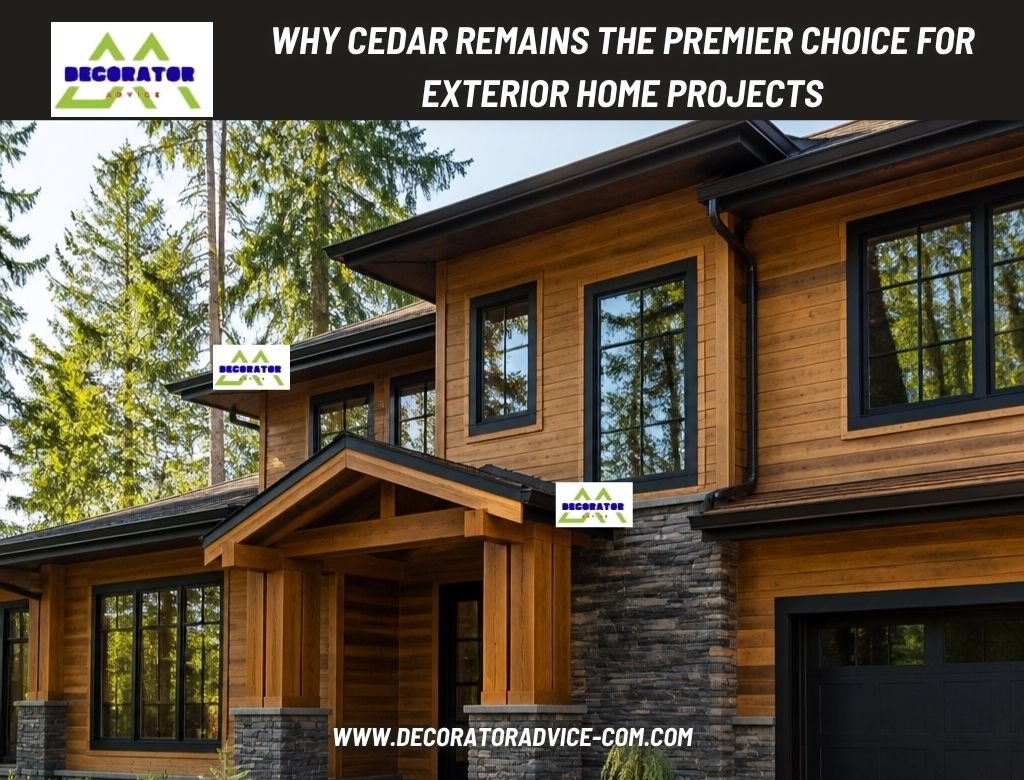
Cedar’s versatility extends across multiple outdoor projects. For vertical applications like siding, the wood’s light weight reduces structural load while its natural taper facilitates efficient water shedding. Shingle and shake profiles offer textured shadow lines that create visual depth, while beveled siding presents a more contemporary aesthetic. Both approaches leverage cedar’s workability, which allows precise milling of complex profiles.
Horizontal applications, including deck surfaces and railings, benefit from cedar’s splinter-resistant characteristics and comfortable tactile properties. Comparing wood options for outdoor decking reveals cedar’s balance of natural appearance and weather resistance, though foot traffic areas may show wear faster than vertical installations. Strategic use of cedar for railings, benches, and accent elements combines its aesthetic appeal with applications that don’t face constant abrasion.
Fencing and Privacy Structures
Cedar fencing has become nearly synonymous with quality outdoor enclosures due to the wood’s resistance to ground contact moisture and its natural appearance that complements landscape plantings. The material ages gracefully, developing a silvery patina that many homeowners prefer to painted alternatives. For those evaluating comprehensive boundary solutions, understanding fence panel selection for privacy and aesthetics helps integrate cedar into overall landscape design strategies.
Cedar’s acoustic properties provide practical benefits in fencing applications, reducing noise transmission from neighboring properties while its natural aromatics can deter some pest species. The wood’s workability allows for custom designs that range from solid privacy panels to decorative lattice configurations, accommodating diverse functional and aesthetic requirements.
Maintenance Considerations and Longevity
While cedar requires less maintenance than many alternatives, understanding proper care extends its service life significantly. Allowing natural weathering produces the characteristic gray patina, but this surface oxidation doesn’t indicate structural degradation. For those preferring to maintain the original honey tones, periodic application of UV-protective stains or oils preserves color while allowing the wood to breathe.
Proper installation contributes more to longevity than maintenance frequency. Ensuring adequate ventilation behind siding prevents moisture accumulation, while appropriate clearance from ground contact and vegetation protects against localized decay. Well-installed cedar regularly achieves service lives exceeding thirty years, with many historic structures demonstrating performance spanning multiple decades.
Liberty Cedar’s Commitment to Quality Materials
Liberty Cedar has established itself as a reliable source for premium Western Red Cedar products throughout North America. The company specializes in providing construction professionals and homeowners with properly processed cedar lumber that meets rigorous grading standards. Their inventory spans multiple product lines, from architectural shingles to dimensional lumber, supporting projects of varying scales and specifications.
The company’s focus on sustainable forestry practices ensures material availability while supporting responsible resource management. Their supply chain emphasizes proper drying and storage protocols that preserve the dimensional stability and natural characteristics that make cedar valuable for exterior applications. This attention to handling details translates to fewer field issues and more predictable installation outcomes.
Making the Cedar Investment Decision
Evaluating cedar against alternatives requires considering lifecycle costs rather than isolated material prices. While initial cedar costs may exceed pressure-treated lumber or vinyl, reduced maintenance requirements and superior longevity often produce lower total ownership costs. The material’s natural insulation properties contribute modest ongoing energy savings, while its aesthetic appeal potentially enhances property values more effectively than synthetic alternatives.
Cedar’s environmental profile appeals to homeowners prioritizing sustainable building practices. As a renewable resource that requires minimal processing and no chemical treatment for basic decay resistance, cedar presents a lower embodied energy footprint than manufactured composites or chemically treated woods. At end of life, cedar returns to the ecosystem without releasing problematic compounds, completing a genuinely sustainable material cycle.
Selecting cedar for exterior projects represents an investment in proven performance backed by centuries of successful applications. Understanding the material’s properties, sourcing from reputable suppliers, and following proper installation practices ensures you maximize cedar’s considerable advantages while creating beautiful, durable exterior spaces that enhance your home for generations.