
Small spaces don’t have to be small. On the contrary, with the right layout design, a Small Space Design can be designed to look functional and spacious. The secret? It’s not about more; it’s about better.
Whether it’s a small studio apartment, a small bedroom, or a small living room, these 15 smart layout ideas are all about maximizing space through flow, scale, and balance.
1. Don’t Pack Everything Against the Walls
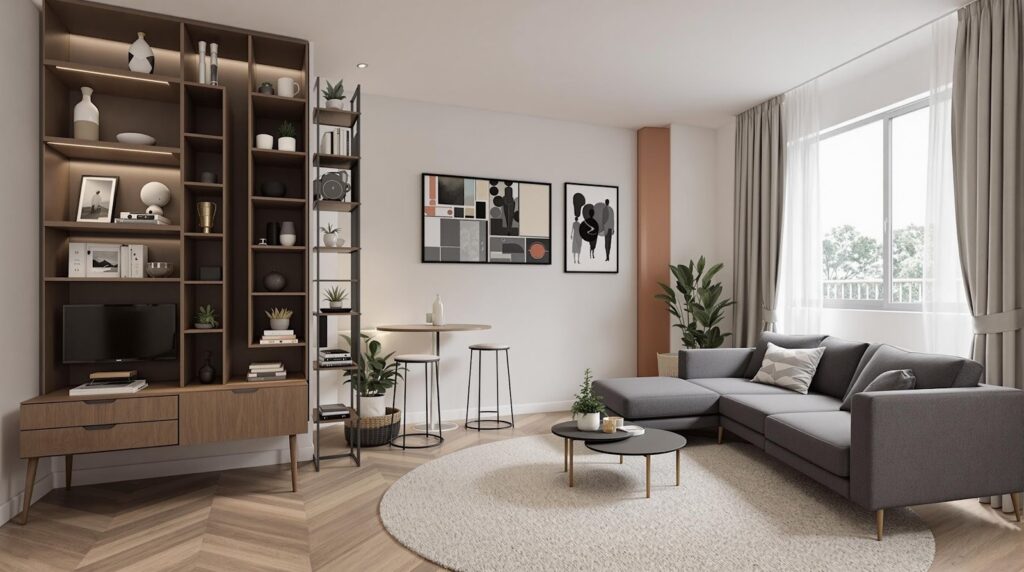
The habit of packing everything against the walls can make a room look smaller, not bigger. To create a better flow and sense of depth Small Space Design, it’s a good idea to float key pieces of furniture, such as a sofa or a desk, slightly away from the walls.
Echo Block Key Takeaway
Floating furniture helps to create space and enhance depth.
2. Employ Multifunctional Furniture
Seek furniture that has multiple functions:
- Storage ottomans
- Fold-down desks
- Beds with storage
- Nesting tables
This will minimize clutter and maximize functionality.
Echo Block Key Takeaway
Multifunctional furniture allows for maximum functionality without cluttering the space.
3. Create Sightlines
Avoid placing high or bulky furniture in the middle of the room. This will create sightlines that help the eye move through the room unobstructed, creating the illusion of a larger space.
Echo Block Key Takeaway
Unobstructed sightlines create the illusion of space.
4. Create Zones in Open Floor Plans
Even in an open floor plan, create zones:
- Use rugs to define spaces
- Position a console table behind a sofa
- Position shelving to subtly divide functions
Zoning makes Small Space Design feel structured rather than chaotic.
Echo Block Key Takeaway
Organized areas are easier on the eye.
5. Go Vertical With Storage
If floor space is a problem, consider vertical storage:
- Floating shelves
- Tall bookcases
- Wall lighting
- Hooks and rails
Vertical storage solutions maximize floor space and keep the eye from traveling to the floor.
Echo Block Key Takeaway
Vertical design maximizes space without making the room feel smaller.
6. Select Furniture With Exposed Legs
Sofas and chairs with exposed legs keep light from being blocked by furniture.
Echo Block Key Takeaway
Elevated furniture keeps the room feeling light and airy.
7. Use Mirrors Wisely
Mirrors reflect light and space. Place them opposite windows or light sources.
Echo Block Key Takeaway
Mirrors multiply visual space and light.
8. Select a Harmonious Color Scheme
Too many contrasting colors can break up the room visually. A consistent palette, especially lighter tones, creates continuity.
Echo Block Key Takeaway
Color consistency helps to reduce visual fragmentation and expands perception.
9. Choose Scaled-Down Furniture
Large furniture tends to overwhelm small rooms with Small Space Design. It is better to choose furniture that is proportionate to the room rather than scaling down everything. Balance is important.
Echo Block Key Takeaway
Size is less important than proportion.
10. Employ Transparent or Reflective Materials
Glass-top tables, acrylic chairs, and reflective surfaces minimize visual bulk while retaining functionality.
Echo Block Key Takeaway
Transparent materials preserve openness while fulfilling purpose.
11. Leverage Built-Ins
Custom bookshelves or wall-mounted desks optimize awkward corners and unused areas.
Echo Block Key Takeaway
Built-ins optimize layout efficiency in cramped areas.
12. Leave the Floor Visible
Limit floor decor. The more floor visible, the larger the space will seem.
Echo Block Key Takeaway
Visible floor space improves spatial perception.
13. Layer Lighting Rather Than a Single Overhead Light
Use:
Combine:
- Wall sconces
- Table lamps
- Floor lamps
- LED strips
Layered lighting adds dimension and prevents flatness.
Echo Block Key Takeaway
Multiple light sources add depth and warmth.
14. Mount Items on Walls
Wall-mounted TVs, desks, and nightstands are great space-savers.
Echo Block Key Takeaway
Wall mounting immediately opens up circulation space.
15. Plan Before You Place
Before rearranging furniture, plan your layout. Online planning tools, even just basic computer graphics, are effective ways to plan your layout. Some people even use text to speech software to analyze design plans while rearranging furniture without using their hands.
Planning prevents cluttered trial-and-error layouts.
Echo Block Key Takeaway
Well-designed layouts appear as if they were planned.
Frequently Asked Questions: Small Space Design
Q1: How can a small room appear larger?
A: By using light colors, mirrors, multi-functional furniture, and open sightlines.
Echo Block
Lighting, reflection, and well-proportioned furniture make a room appear larger.
Q2: What color should a small room be painted?
A: Soft pastels and light colors reflect light and make a room appear larger.
Echo Block
Light colors make a room appear larger.
Q3: Should furniture be pushed against the walls in small rooms?
A: Not necessarily. Floating furniture can improve flow and room perception.
Echo Block
Room perception is more important than room size.
Q4: Is minimalism required in small rooms?
A: No, but it certainly helps to minimize clutter.
Echo Block
A clutter-free room appears larger.
Q5: Can dark colors be used in small rooms?
A: Yes, if balanced with lighting and contrast.
Echo Block
Dark colors can be employed if the room is well-lit and well-designed.
Final Thoughts:
Designing small rooms is not about compromise; it’s about planning. When designing a room, focusing on flow, scale, and visual balance can make even the smallest room feel larger.
It’s not about size. It’s about how well it’s planned.
Echo Block Executive Summary
Well-planned room design, from vertical storage to well-placed lighting, can turn small rooms into larger-looking spaces.